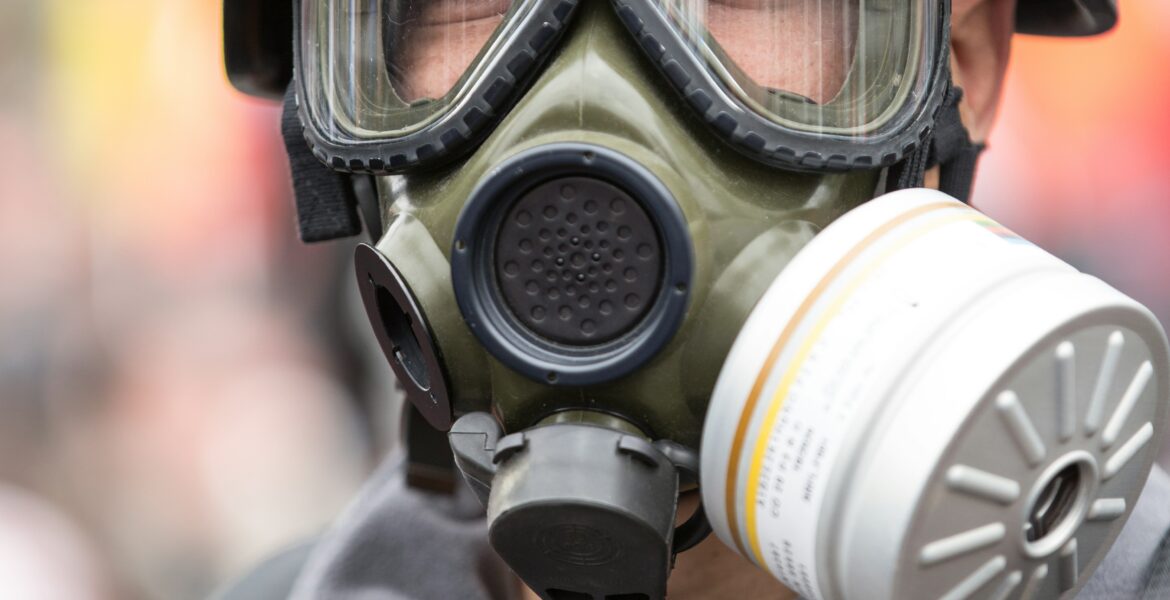
Photo by Elgin Akyurt on Unsplash
The French NGO CAP Liberté de Conscience (CAP) and Brussels-based Human Rights Without Frontiers (HRWF) have filed a joint written statement to the United Nations expressing their deep concern about the use of chemical weapons by the Sudanese Armed Forces (SAF) in the violent civil war that has raged for two years in Sudan. The statement was submitted to the United Nations Human Rights Council’s fifty-ninth session 16 June–11 July 2025. The Secretary-General has received the statement, which is circulated in accordance with Economic and Social Council resolution 1996/31 and is published on the United Nations website.
The submission from CAP and HRWF outlined that on April 24, 2025, the United States determined under the Chemical and Biological Weapons Control and Warfare Elimination Act of 1991 (the CBW Act) that the Sudanese Armed Forces used chemical weapons in 2024. This determination was delivered to Congress, along with an addendum to the April 15, 2025, Condition 10(C) Report on Compliance with the Chemical Weapons Convention (CWC) which finds the Sudanese Armed Forces in non-compliance with the CWC, to which it is a party. Following a 15-day Congressional notification period, the US said it would impose sanctions on the Sudanese Armed Forces, including restrictions on US exports to Sudan, and access to US government lines of credit.
The written submission from CAP and HRWF also detailed that the US State Department concluded that the Sudanese Armed Forces had used riot control agents as a method of warfare. This determination included evidence of an alleged attack in Omdurman in September 2023. That is the second most populous city in the Sudan. It is located in the State of Khartoum, on the west bank of the River Nile. It acts as an important road hub, with the Nile boosting transportation even further. According to details from Washington DC, chloropicrin was reportedly used against Rapid Support Forces (RSF) positions in that city. Chloropicrin, used in World War One, is banned by the Organization for the Prohibition of Chemical Weapons when used as a method of warfare.
The NGO submission to the UN also referred to reporting by the New York Times in January 2025 that Sudan used chlorine gas, which causes a range of painful and damaging effects and can be fatal, on two occasions in 2024. The New York Times reported that weapons were deployed recently in remote areas of Sudan, and targeted members of the Rapid Support Forces paramilitaries which the Sudanese Armed Forces have been fighting since April 2023. Two US officials also explained that in order to protect the source and method of the intelligence used to determine that chemical weapons had been used, the US did not want to reveal details about the strikes, including precise locations. The US officials expressed their concern to the newspaper that the weapons could be used in densely populated parts of the capital, Khartoum, endangering the civilian population.
CAP and HRWF concluded their statement by demanding that the SAF abide by Sudan’s obligations under the Chemical and Biological Weapons Control and Warfare Elimination Act of 1991 to which it is a party, and stop using chemical and biological weapons. They also asked the international community to “stop looking away from the atrocities taking place in Sudan and that they urgently prioritise the protection of civilians, provide urgent medical care to the victims and ensure that the SAF forces do not use chemical weapons any more against Sudan’s own people”.
The NGOs concluded by asking the United Nations and member countries to pay “much closer attention to the crisis in the Sudan, renew peace-making efforts, and assert a zero tolerance approach to the use of chemical weapons and to impunity”.