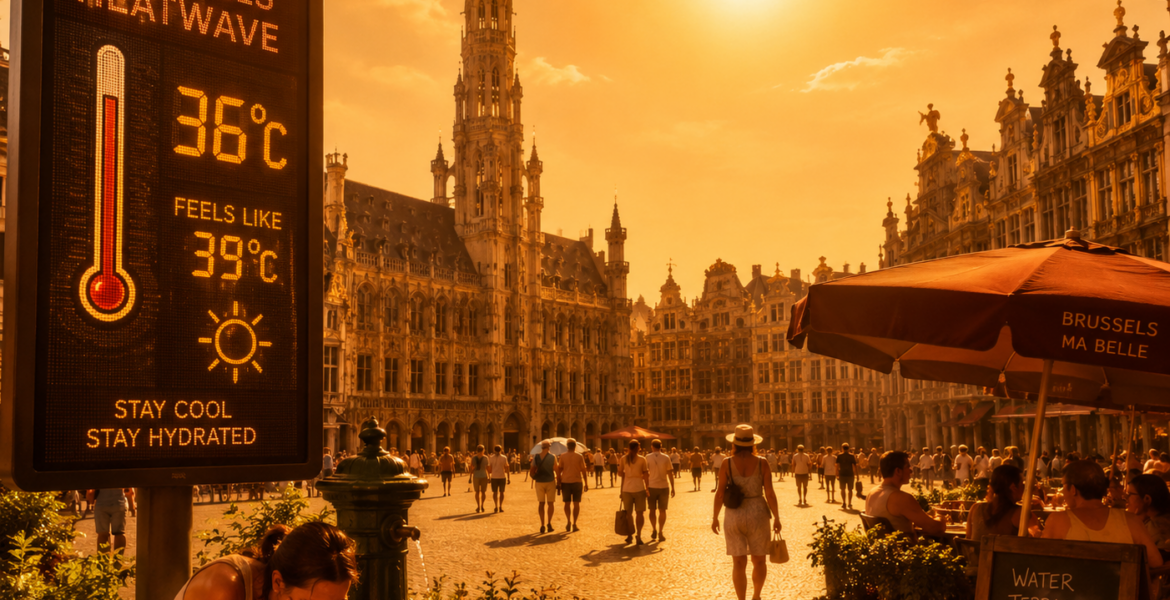
Brussels is enduring one of its most intense heatwaves in recent memory, with official data confirming temperatures well above seasonal norms. The Royal Meteorological Institute (RMI) has warned that sustained high temperatures, consistently above 30°C and reaching up to 38°C, have triggered Belgium’s national heatwave alert, underscoring the seriousness of the situation.
The capital’s urban landscape is amplifying the crisis. Copernicus Sentinel‑3 satellite data recorded land surface temperatures exceeding 47°C in parts of Brussels, while the nearby Sonian Forest remained dramatically cooler at around 24.5°C. This stark contrast illustrates the city’s vulnerability: dense, mineralised neighbourhoods trap heat, intensifying the urban heat island effect and prolonging residents’ exposure.
The broader meteorological pattern behind this extreme spell — a persistent high‑pressure system known as an Omega block — has locked Western and Central Europe into a prolonged period of scorching temperatures. Belgium is among the countries most affected, with authorities cautioning that the combination of high daytime heat and elevated night‑time temperatures poses significant health risks, particularly for older people, children, and those with pre‑existing conditions.
Climate projections from the Belgian Climate Centre show that such events are becoming more frequent and more intense, with long‑term data indicating a clear upward trend in extreme heat episodes across the country. Historical observations also confirm that Belgium’s summers have warmed significantly over the past three decades, increasing the likelihood of dangerous heatwaves.
As temperatures rise, Brussels authorities have activated heatwave response measures, including public health guidance and targeted support for vulnerable residents. But the scale of the challenge is evident: the city’s dense built environment, limited green cover in several municipalities, and high population density make adaptation both urgent and complex.
Advice for residents during the heatwave
- Stay hydrated — Drink water regularly, even if you do not feel thirsty.
- Avoid peak heat — Limit outdoor activity between 12:00 and 18:00, when temperatures are highest.
- Seek cooler spaces — Public buildings such as libraries and museums offer temporary relief.
- Ventilate strategically — Keep blinds closed during the day; ventilate at night if temperatures drop.
- Check on vulnerable neighbours — Elderly and isolated individuals face the greatest risks.
- Recognise warning signs — Symptoms such as dizziness, confusion, or nausea require immediate attention.
Brussels’ current heatwave is not an isolated event but part of a broader pattern of intensifying climate impacts. As temperatures climb and records fall, the city’s resilience, from urban planning to public health systems, is being tested. This week’s extreme conditions serve as a reminder that adaptation is no longer optional: it is a necessity for safeguarding the health and wellbeing of Brussels’ residents.