© Photo by Anastasiia Krutota on Unsplash
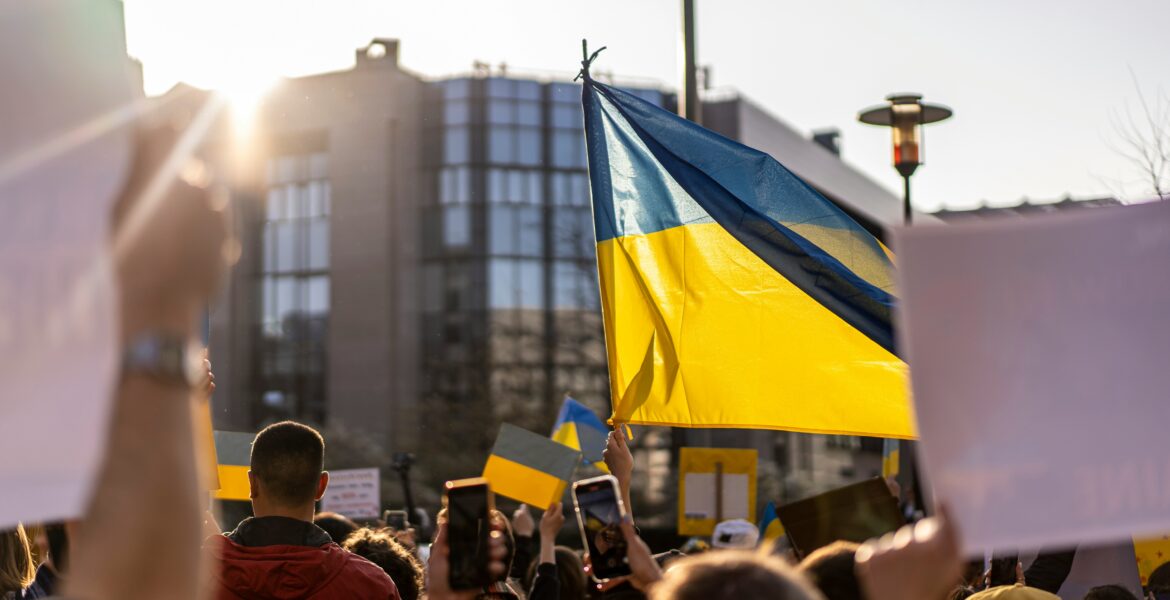
Russia’s war against Ukraine has entered a phase defined by battlefield exhaustion and political acceleration in Europe, as Kyiv’s survival increasingly depends on decisions taken in Brussels. The military situation remains largely static: Russia continues to push along parts of the eastern front, relying on manpower advantages and intensified drone and missile strikes, while Ukraine faces persistent shortages of ammunition and air‑defence systems. Moscow’s incremental gains and sustained attacks on Ukraine’s energy grid have forced Kyiv to ration resources and prioritise defensive operations. Ukraine’s strategy now centres on holding fortified lines, disrupting Russian logistics and protecting critical infrastructure — an approach that depends entirely on the speed and scale of Western, particularly European, support.
That dependency has placed the European Union at the centre of the war’s political trajectory. In a major shift, the EU has now formally approved a €90 billion support loan for 2026–27, ending months of deadlock after Hungary and Slovakia lifted their objections once oil flows through the Druzhba pipeline resumed following repairs, not to mention the imminent departure of the EU’s bête noire, Viktor Orbán. The loan — structured in two €45 billion tranches — is designed to stabilise Ukraine’s budget, reinforce defence spending and provide predictable macro‑financial support at a moment when Kyiv risks running short of funds by mid‑year. President Zelensky has urged rapid disbursement, with the first tranche expected by late May or early June.
Alongside the loan, the EU has adopted its 20th sanctions package, targeting Russia’s energy, banking and trade sectors, including measures against the “shadow fleet” used to circumvent oil‑export restrictions. The Foreign Affairs Council has also endorsed widening sanctions to address Russian hybrid activities and approved new restrictive measures against entities involved in disinformation and destabilisation efforts.
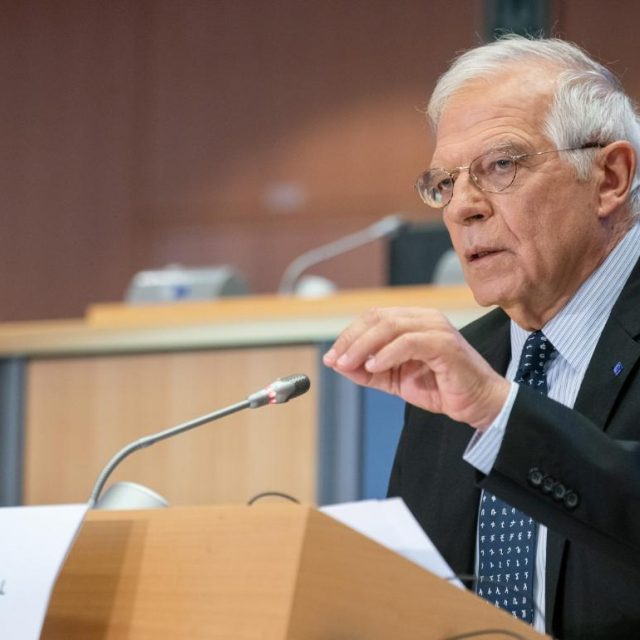
Inside the European Parliament, the tone has hardened further. MEPs warn that delays in ammunition deliveries and slow industrial ramp‑up risk undermining Ukraine’s position on the battlefield. Calls to accelerate joint procurement, expand European production lines and ensure that pledges translate into real‑time deliveries have intensified. Germany has publicly pressed member states to “remove obstacles” to urgently needed support, urging faster approval of military aid and stronger pressure on Russia, particularly in the energy sector.
The Commission continues to balance wartime urgency with institutional discipline. While monitoring Ukraine’s progress on judicial and anti‑corruption reforms, it is simultaneously pushing to strengthen Europe’s defence industrial base — a weakness exposed by the war. This includes expanding ammunition production, incentivising cross‑border defence projects and deepening cooperation with Ukrainian industry. The Council has now endorsed moving ahead with the fourth pillar of European security guarantees, covering defence‑sector reform, cyber and hybrid support, demining and assistance for war veterans.
Across the institutions, there is growing recognition that the war will not end quickly. EU leaders are speaking more openly about long‑term security commitments that extend beyond emergency funding cycles. NATO and the EU have jointly called for predictable, coordinated and sustained support, underscoring that Europe must shoulder a larger share of the burden as the United States recalibrates its role.
For Kyiv, the stakes remain existential. For Brussels, they are defining. The EU’s decisions — on funding, defence, sanctions, enlargement and the use of frozen Russian assets — will shape not only Ukraine’s prospects but the credibility of the Union itself as a geopolitical actor in a world where power is measured by the ability to act, not merely to declare intentions.
– by Siobhan Dillon, Editor-in-Chief