European agriculture is entering a decisive decade. A new European Commission study, released on 20 May 2026, confirms what many in the sector have long warned: climate pressures, demographic decline and regulatory complexity are converging to reshape farming across the continent. The report, based on fifteen case studies across eleven Member States, offers the clearest evidence yet that resilience is no longer a theoretical policy ambition but a daily operational necessity.
The study’s central conclusion is blunt. “Climate change is the most significant factor shaping agricultural adaptation across regions and sectors,” it states, noting the growing frequency of droughts, water scarcity, heatwaves and extreme weather events. Farmers are already responding by shifting crop choices, improving water management and adjusting cultivation practices — incremental changes that, taken together, signal a sector in transition.
But climate is only one part of the story. Labour shortages and generational renewal emerge as equally structural challenges. The report highlights the ageing farming population and the difficulty of attracting younger entrants, particularly in labour‑intensive sectors such as horticulture and dairy. These trends, it warns, “reinforce the need for targeted support for generational renewal” and for policies that make rural areas more attractive places to live and work.
Economically, farmers are navigating a volatile environment marked by price instability, global competition and evolving regulatory requirements. While these pressures add strain, the Commission argues they are also driving innovation and efficiency. The study identifies “practical pathways” already emerging across the sector — evidence, it says, that adaptation is not new but accelerating.
Politically, the findings land at a sensitive moment. The Vision for Agriculture and Food (2025) sets out a long‑term roadmap towards a more resilient, competitive and fair agri‑food system by 2040. Yet the gap between ambition and implementation remains a point of tension between the Commission, Member States and farm organisations. The new evidence is likely to intensify debates over the next Common Agricultural Policy cycle, particularly around funding for climate adaptation, rural development and labour market reforms.
The study also intersects with the Commission’s broader resilience agenda. The Joint Research Centre’s work on the Agricultural Sector Resilience Progress Indicator (I.9) underscores the need for early‑warning tools capable of detecting when resilience is “regressing, stagnating or progressing.” The indicator’s focus on production, income, water and soil resilience aligns closely with the adaptation pathways identified in the new report, strengthening the case for more integrated monitoring across EU policies.
For policymakers, the message is clear: resilience is multidimensional. It requires climate‑smart practices, economic stability, social renewal and regulatory predictability. For farmers, the study offers recognition of the adjustments already underway — and a reminder that the sector’s capacity to innovate remains one of its greatest strengths.
As the EU prepares for the next phase of agricultural reform, the political challenge will be to translate this evidence into action. The Commission’s study provides the roadmap. What remains is the political will to follow it.
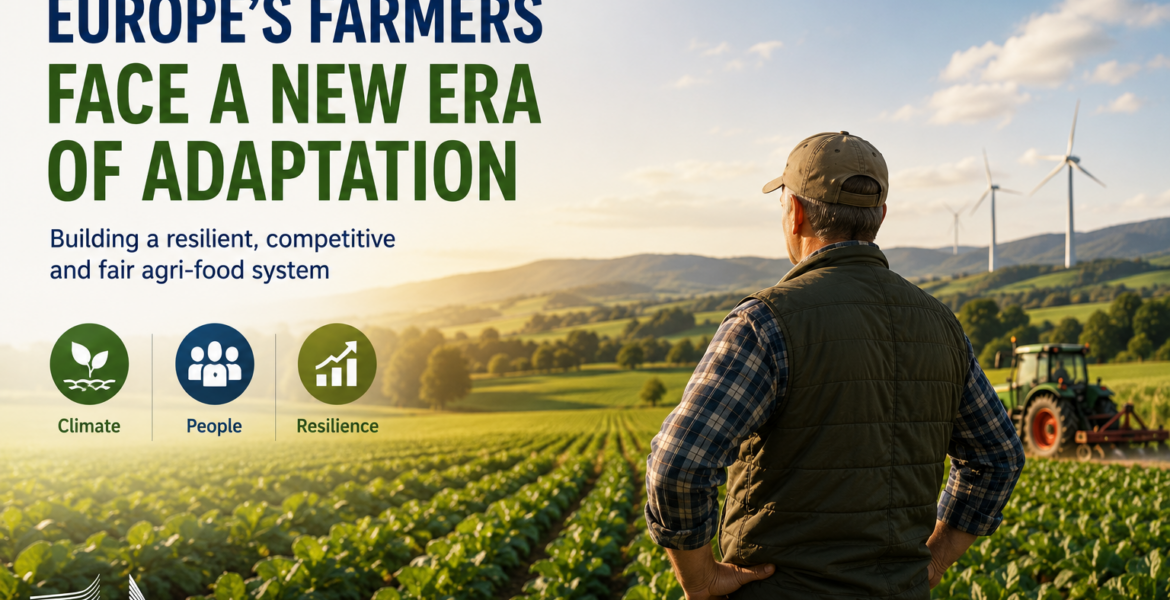
Image credit: Chat GPT, using the EC logo