
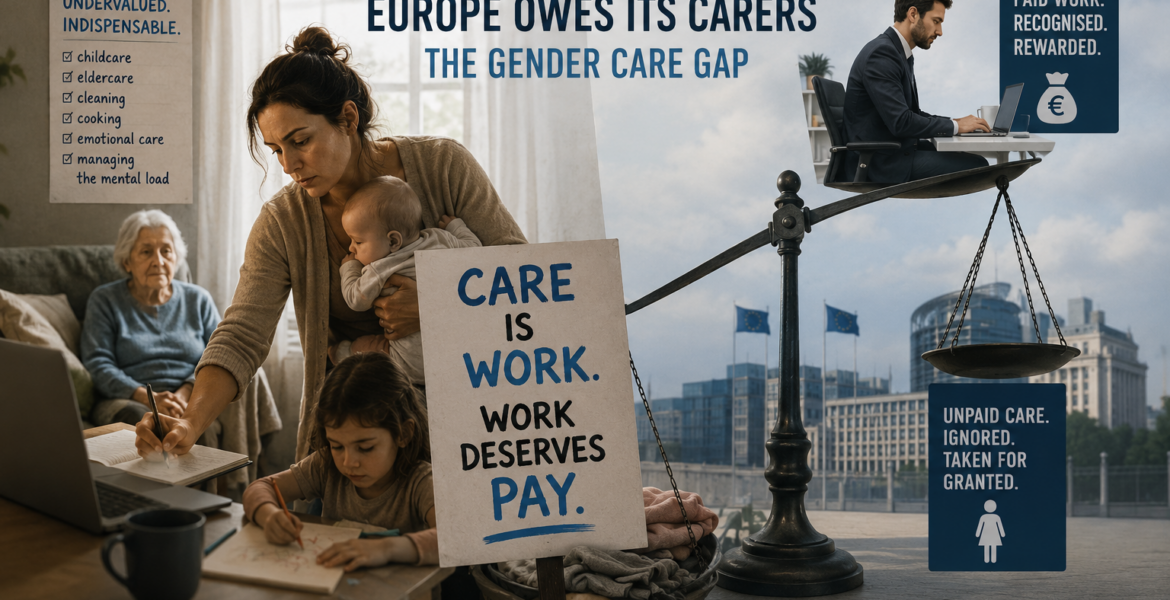
The European Parliament’s latest intervention on Europe’s care systems signals a growing political consensus: the gender care gap is no longer a social‑policy footnote but a structural fault line shaping Europe’s economic future. By adopting a report that frames access to quality care as a fundamental right, MEPs are pushing the Commission and member states toward a more ambitious, rights‑based approach to both formal and informal care. The message is unmistakable—Europe cannot meet its demographic, economic or equality goals while half of its population continues to absorb the majority of unpaid care work.
The Parliament’s language is unusually direct. As rapporteur Sirpa Pietikäinen put it, “Care is not a private issue—it is a societal responsibility, and we need to treat it as such.” That framing matters. It shifts the debate from individual sacrifice to collective obligation, and it underscores the economic cost of inaction. Women remain overrepresented in low‑paid care jobs and are overwhelmingly responsible for unpaid care at home, limiting their labour‑market participation and deepening long‑term inequalities, including in pensions. Parliament’s call for a European carers’ statute is therefore more than a technocratic proposal; it is an attempt to create a coherent rights framework for the 53 million informal carers who currently operate with little recognition and even fewer protections.
Yet the political path ahead is far from straightforward. Care remains a jealously guarded national competence, and while member states broadly agree on the need for better services, they diverge sharply on how far the EU should go. The Parliament’s push for stronger home‑ and community‑based services, better working conditions, and formal recognition of carers’ social‑security rights will require sustained national investment—something governments have been reluctant to prioritise, even as demographic pressures intensify.
The report also touches on politically sensitive terrain by acknowledging the essential role of non‑EU workers in the care economy while insisting on fair conditions and legal pathways. This reflects a broader European tension: the bloc depends on migrant labour in essential sectors but remains politically cautious about expanding legal migration channels. Parliament’s condemnation of undeclared work and exploitation is a reminder that the care sector still operates in the shadows far too often.
The Commission’s planned European care deal in 2027 will be the moment of truth. Parliament has set out a blueprint centred on rights, recognition and redistribution. Whether Member States match that ambition—or continue to rely on the invisible labour of women—will determine whether Europe’s care crisis becomes a catalyst for equality or a missed opportunity.