Europe’s defence agenda is accelerating again, driven by a mix of geopolitical pressure, industrial urgency and a growing recognition that the EU must move beyond fragmented national capabilities. The latest developments show a Union trying to balance ambition with realism, and politics with procurement, as Member States confront the hard truth that Europe’s security environment has fundamentally changed.
The Commission’s newest package on defence industrial readiness marks a shift from long‑term aspiration to short‑term operational necessity. Officials describe it as an attempt to close the gap between what Europe says it wants to do and what it can actually deliver. The proposal centres on joint procurement, faster certification of defence technologies, and a more predictable pipeline for industry, all areas where the EU has historically struggled to move at speed. The political message is clear: Europe cannot afford delays when its neighbourhood is defined by instability.
Commissioner for Internal Market Thierry Breton captured the urgency in unusually direct terms, saying, “Europe must be able to defend itself. That means producing more, producing faster, and producing together.” His words reflect a broader shift in tone across Brussels, where defence is no longer treated as a peripheral competence but as a strategic pillar of the Union’s future.
Politically, the package lands in a complex landscape. Eastern Member States broadly welcome the stronger industrial focus, seeing it as essential to sustaining support for Ukraine and deterring further aggression. Western capitals, while supportive, remain cautious about anything that resembles duplication with NATO. The Commission’s approach — framing EU defence as complementary rather than competitive — is designed to reassure, but the debate over competence and control will continue.
The industrial dimension is equally sensitive. Europe’s defence sector is dominated by a handful of large national champions, each with strong political backing. Joint procurement challenges these entrenched interests, pushing governments to prioritise interoperability over domestic advantage. Whether they will do so consistently remains an open question.
Still, the direction of travel is unmistakable. The EU is edging towards a more integrated defence posture, driven less by ideology and more by necessity. The coming months will test whether Member States are prepared to match political rhetoric with financial and industrial commitment. If they do, Europe’s defence union, long discussed, rarely realised, may finally begin to take shape.
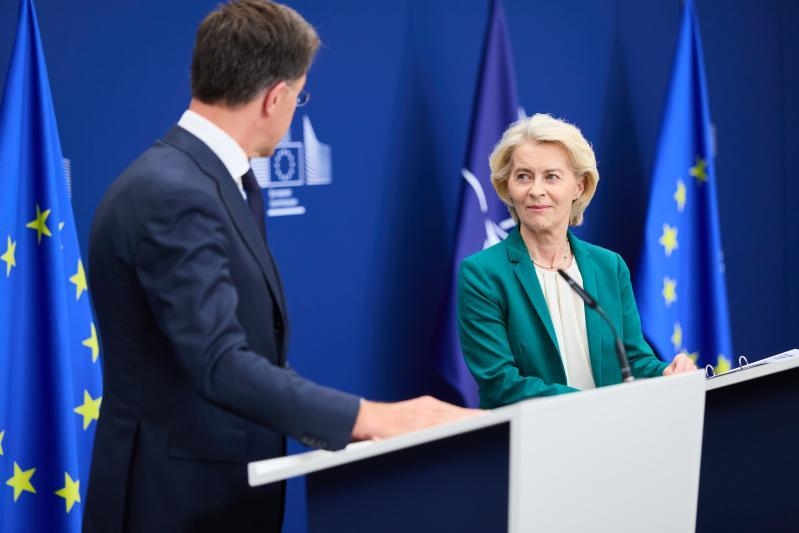
Image: President von der Leyen with NATO Secretary-General Mark Rutte credit: European Commission