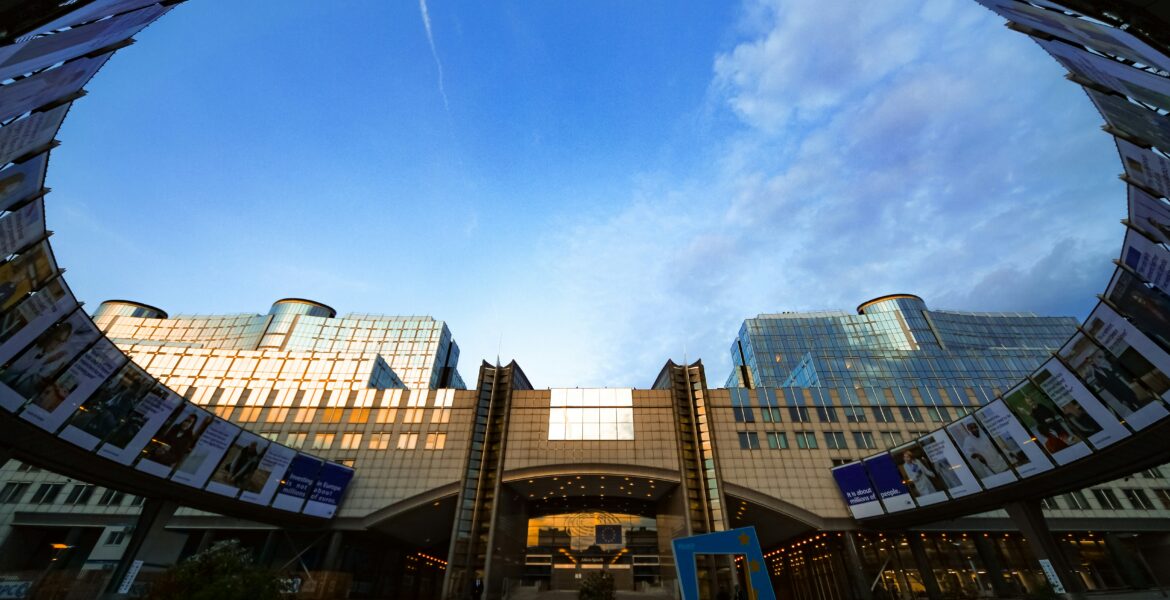
The upcoming committee week in Brussels will be dominated by budget politics, AI regulation, and a dense round of ministerial and diplomatic activity across the institutions.
As the European Parliament returns to Brussels for committee week, the institutions are gearing up for a dense stretch of legislative work and political signalling. With the Strasbourg plenary week now behind them, MEPs move straight into a packed agenda that will test the Parliament’s bandwidth on files ranging from economic governance to artificial intelligence, climate policy and external relations.
The week opens with heavyweight committees setting the tone. ECON meets on 4–5 May to scrutinise the state of the EU economy and ongoing governance reforms, while ENVI gathers over the same two days to advance work on environmental and public‑health legislation, including amendments to the Union’s performance and tracking framework for budget expenditure. AGRI also convenes on 4–5 May, continuing its scrutiny of post‑2027 CAP proposals and the market situation—an area where ministers have already been active in Council discussions.
On 5 May, TRAN and CONT take over, with TRAN hosting a presentation by Commissioner Tzitzikostas on Ports and industrial maritime strategies and CONT voting on the access of the European Public Prosecutor’s Office (EPPO) and the European Anti-Fraud Office (OLAF) to value-added tax information at the Union level. DEVE also meets that day, with a vote scheduled on reinforcing development cooperation to address irregular population movements and their root causes in partner countries.
Mid‑week, attention shifts to human rights and budget politics: DROI meets on 6–7 May, while BUDG holds a two‑day session expected to be closely watched given the Parliament’s assertive stance on the next Multiannual Financial Framework and the broader debate on EU financing.
Several committees will also handle politically sensitive items. AFCO continues its work on the institutional implications of artificial intelligence, with amendments to its draft report now tabled. PETI, meanwhile, processes a series of GDPR‑related and cross‑border complaints—small files individually, but collectively a reminder of the Parliament’s role as a channel for citizen grievances.
Beyond the Parliament, the wider institutional machinery is equally active. Council configurations remain in regular session, with agriculture ministers recently discussing wildfire prevention, CAP reform and market pressures, while negotiators from the Parliament and Council attempt to reach agreement on postponing certain rules for high‑risk AI systems—an early test of how the institutions will handle the next phase of AI regulation.
The Commission, for its part, is running its own parallel track of policy preparation, including a “reality check” on the revision of the e‑Invoicing Directive—an important step in the broader digitalisation of the Single Market.
High‑level events also punctuate the week. European Youth Week continues in Brussels, bringing a different kind of political energy into the institutions as the Commission marks 30 years of volunteering and focuses on solidarity and fairness. Meanwhile, diplomatic attention is already shifting toward early‑May summits, including the EU–Armenia Summit and the European Political Community meeting, both of which will draw heads of state and government into a broader geopolitical conversation.
The week ahead is a reminder of how quickly the EU’s political centre of gravity snaps back to Brussels after plenary. Committees will shape the legislative files that define the next months, Council and Commission activity will frame the negotiations to come, and high‑level visits will keep the geopolitical dimension firmly in view. The institutions may be operating on parallel tracks, but this week they are unmistakably moving at their usual speed. It’s not summer yet…
Photo by Paolo Margari on Unsplash